Community Values
The values that guide the Arrow community.
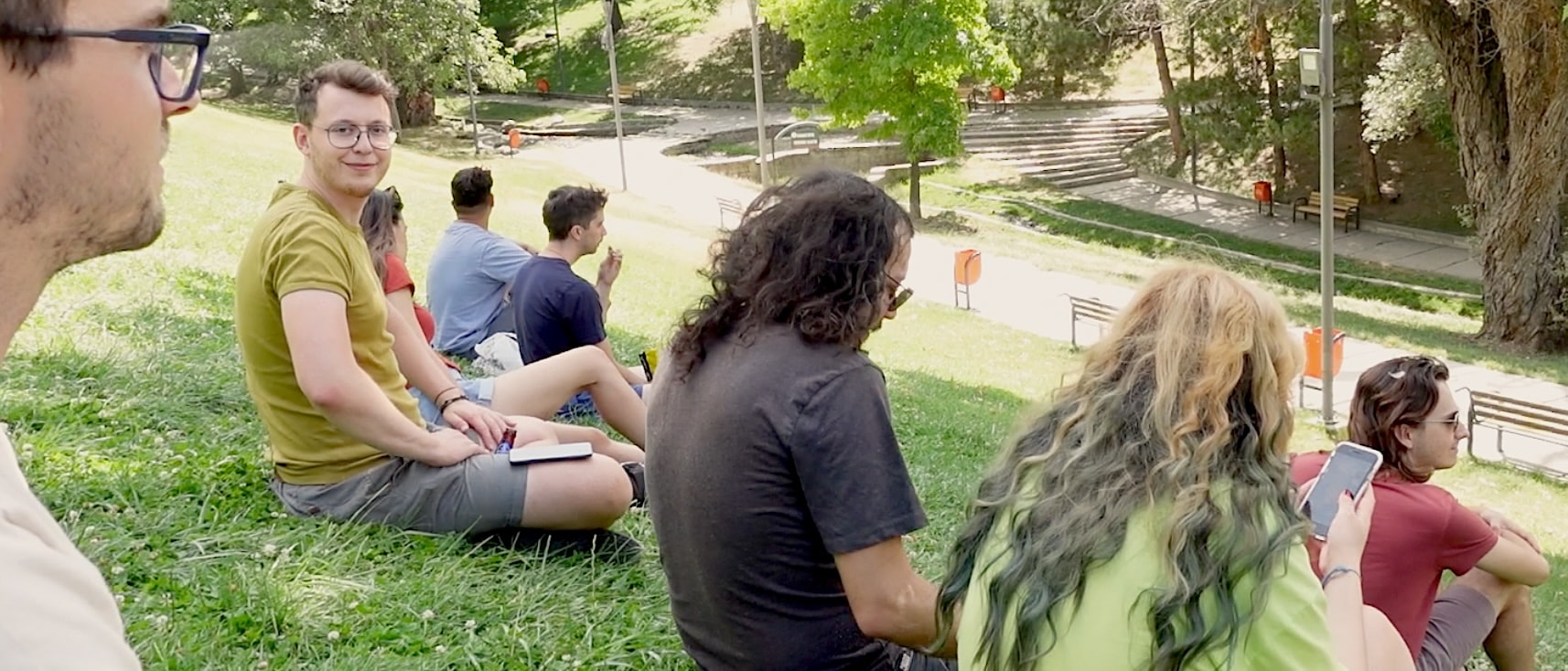
Arrow has no HR department, no culture deck, no offsite where someone facilitates a whiteboard session about values. These aren't aspirational statements. They're descriptions of how the community actually works, and what we expect from each other.
We build in public
Everything Arrow does is open by default. Design files, code, decisions, mistakes. Our repositories are public, governance votes are on-chain, and the DAO forum is readable by anyone.
Traditional aerospace works the opposite way. Secrecy is assumed, NDAs are standard, sharing knowledge outside the organization is treated as a liability. We think that produces worse aircraft and shuts out most of the world's talent. Building in public means our work can be scrutinized, improved, and built on by people we've never met. That's the whole point.
If you're working on something at Arrow, assume it's visible. If you're making a decision, write it down somewhere permanent.
The DAO governs, not individuals
Arrow has no CEO, no board, no management chain that can unilaterally redirect the organization. Significant decisions (new projects, budget allocation, governance changes) go through the AIP process and are voted on by token holders.
The votes are on-chain. The results bind the treasury. That means when you hold $ARROW, you have a real vote on what gets built and how resources get spent — not a symbolic one.
If you think something should change, write a proposal and make your case publicly. Good arguments win here, not seniority, not who you know.
Contributions make us stronger
Open source compounds:
- A design improvement by one contributor becomes the baseline for the next.
- A bug caught by someone new prevents problems downstream.
- Every pull request, every forum post, every documented build log is permanent. It doesn't disappear when that person moves on.
That's why documentation and public communication matter so much at Arrow. A decision that lives only in someone's head is a liability. Written up and publicly accessible, it becomes an asset.
We don't gate contributions. You don't need a formal role, a specific credential, or anyone's permission to submit a PR, post on the forum, or claim a bounty. If the work is good, it ships.
Don't wait for permission
Nobody is going to tell you what to work on. If you see something that needs doing and you think you're the right person to do it, do it. That applies whether you're fixing a typo in the docs, redesigning a component, or drafting an AIP for a new project.
You also need to communicate proactively. Before putting significant effort into something new, say something in Discord or the forum. Someone may already be working on it, or may have context that changes your approach. "Don't wait for permission" doesn't mean "work in isolation." It means taking ownership and keeping people in the loop while you do.
If you're regularly waiting to be assigned work, something has gone wrong.
Write things down
Arrow operates asynchronously across many time zones. Discord is where the community lives day-to-day, but Discord is ephemeral. Conversations scroll away, context disappears. Anything that matters needs to end up somewhere permanent: GitHub, the DAO forum, or these docs.
Writing forces clarity. A decision that seems obvious in your head often turns out to be ambiguous when you actually try to write it down. Good. If you can't explain a decision clearly in writing, it's worth revisiting before you act on it.
When you open a PR, write a proposal, or document a build process, assume the reader hasn't been following your thought process. Give them enough context to evaluate it without needing to ask follow-up questions.
Merit over credentials
We don't care whether you have a degree in aerospace engineering. We care whether you can do the work. Arrow has contributors who are professional engineers, people who learned CAD from YouTube, and everything in between.
Same goes for governance. $ARROW is distributed to contributors based on what they ship, not their seniority or background. A new contributor who shows up consistently and does good work builds more real influence over time than someone with an impressive CV who doesn't.
If you want to earn trust at Arrow, the path is the same for everyone:
- Contribute something real.
- Communicate clearly.
- Keep showing up.
We're building something that flies
Software can be patched. Aircraft can't. Arrow builds hardware that leaves the ground, carries payloads, and (if we do this right) carries people. That creates a different standard of care than most open source projects.
Being rigorous isn't the same as moving slowly. We're honest about failure, thorough in our documentation, and public about our mistakes. When a test fails, we document why. When a design assumption turns out to be wrong, we say so and fix it. Arrow's long-term credibility depends on being the kind of organization that actually gets this right, not just one that moves fast.
Patience matters here. The path from a 25kg quadcopter to something that carries people is long. We'd rather build a solid foundation than rush toward a milestone we're not ready for.